

Key Takeaways
- Start by stating the precise dispute in plain language.
- Review loan documents as one complete record, including amendments and notices.
- Use a dated timeline to connect payments, communications, defaults, and lender actions.
- Reconcile claimed balances against original account and payment records.
- Prepare organized, traceable materials before requesting expert analysis or discussing settlement.
Banking disputes often become difficult because the relevant facts are spread across loan agreements, account statements, emails, servicing records, appraisals, and notices sent over months or years. A clear record helps attorneys, business owners, borrowers, and lenders identify what happened, when it happened, and which documents support each position.
When the issues involve account calculations, lending practices, collateral, or damages, a financial expert witness may be able to analyze the financial record and explain complicated information in a structured way. The strongest expert review begins with a file that is complete, indexed, and grounded in original records.
Why A Clear Record Matters
Unorganized files can create conflicting narratives and make it harder to evaluate a dispute early. Common disagreements include alleged loan defaults, payment application, interest and fee calculations, renewals, collateral values, collection activity, lender conduct, and irregular transactions. Lending conditions may also shape how institutions assess risk and troubled credit, and the Federal Reserve’s survey of bank lending practices provides useful context on changes in lending standards and loan demand.
A record is not persuasive simply because it is large. It should make it easy to locate the governing agreement, identify the relevant event, and trace the conclusion back to a reliable source document.
Step One: Define The Exact Dispute
Begin by reducing a broad complaint to one or two focused questions. For example: Was the borrower in default under the controlling agreement? Did the lender apply payments as the agreement required? Were interest, fees, escrow, or late charges calculated correctly? Did a written modification change the original terms? A short issue statement keeps the review focused and prevents irrelevant records from overwhelming the file.
Step Two: Gather The Core Loan Documents
Collect the complete lending record, not just the original note. The core file may include:
- Loan applications, commitment letters, term sheets, promissory notes, and credit agreements.
- Security agreements, mortgages or deeds of trust, guaranties, and intercreditor agreements.
- Amendments, renewal documents, waivers, payment schedules, UCC filings, and releases.
- Default notices, demand letters, payoff statements, and settlement correspondence.
An amendment, side letter, waiver, or renewal notice can affect how the earlier agreement should be interpreted. Preserve signed versions, attachments, and records showing delivery or receipt when available.
Step Three: Build A Document Timeline
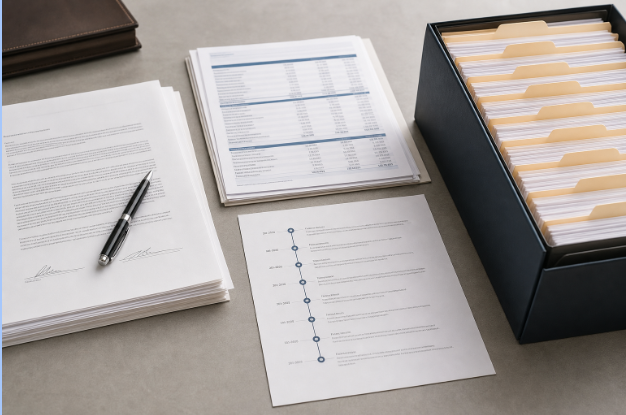
A timeline is one of the most practical ways to find gaps and test competing accounts. Record the application, approval, closing, advances, payments, reporting deadlines, covenant warnings, extension requests, property inspections, appraisals, default notices, collection contacts, settlement discussions, and any foreclosure, repossession, or bankruptcy event.
For every entry, identify the date, the event, the source document, and why it may matter. This can reveal whether a lender’s decision occurred before or after a missed payment, a changed valuation, a reported covenant issue, or a request for a workout.
Step Four: Reconcile Payments And Account Balances
Do not accept or reject a claimed balance without tracing it. A useful reconciliation process includes:
- Collecting bank statements, lender transaction histories, and payment confirmations.
- Matching each payment by date, amount, sending account, and receiving account.
- Checking whether each payment was applied to principal, interest, fees, or escrow.
- Comparing payoff figures and late charges with the governing loan documents.
- Listing unexplained fees, duplicate charges, missing credits, and unresolved differences.
Use a simple reconciliation list for each transaction: transaction date, payment amount, source record, lender credit, disputed amount, and notes. The spreadsheet is an organizing tool, while the underlying statements and transaction records remain the support for the entry.
Step Five: Review Communications And Internal Decisions
Emails, letters, call notes, servicing logs, meeting records, and attachments can show how a loan was handled in practice. Preserve original email chains and avoid relying only on copied excerpts. Look for changing explanations, unanswered requests, financial information supplied by the borrower, and differences between verbal statements and written terms.
Internal policies or servicing procedures may help explain a lender’s process, but a policy alone does not establish a legal duty or prove that a duty was breached. Separate verified communications from personal interpretations of those communications.
Step Six: Test Collateral And Damages Claims
Collateral and damages frequently require their own analysis. Review the date and purpose of each appraisal, the valuation assumptions used, changes in property condition, inspections, insurance, maintenance records, and the timing of a sale or disposition. Then connect claimed losses, such as added interest, legal expenses, lost profits, or a shortfall, to specific financial events.
For example, a lender may claim that a collateral sale produced a deficiency, while a borrower may contend that an inaccurate valuation, delayed sale, or account error increased the claimed shortfall. The critical question is whether the records support both the amount and the asserted cause of the loss.
When To Seek An Expert Review
Expert review can be useful when a dispute turns on banking practices, lending decisions, accounting, valuation, payment application, or damages. An expert may assess whether the account history supports a claimed balance, whether fees were applied consistently with the documents, whether a workout followed a reasonable sequence, or whether alleged damages can be tied to identified events. Legal conclusions remain for the court or arbitrator.
How To Prepare A File For Review
- Create a short case summary and identify the main disputed issues.
- Prepare a dated timeline and organize documents by category.
- Use consistent file names, searchable PDFs, and a document index.
- Mark is missing records clearly instead of guessing about their contents.
- Separate confirmed facts from disputed allegations and list the questions requiring analysis.
Common Mistakes That Weaken A Banking Dispute
Frequent problems include relying on memory rather than records, sending large document collections without an index, ignoring unfavorable documents, mixing opinion with fact, failing to preserve texts or electronic records, and using a balance figure without showing the calculation. Early review is usually more productive than waiting until trial preparation to reconstruct the account history.
How Early Review Can Support Settlement
A shared financial record can make mediation or structured negotiations more focused because the parties can distinguish disputed issues from basic facts they both accept. In banking matters, lending relationships can become the subject of disputes when a credit relationship becomes distressed, making clear documentation especially valuable.
Frequently Asked Questions
What Is The Most Important Document In A Banking Dispute?
There is no single answer for every matter. The signed loan agreement, amendments, payment history, and default notices often provide the starting point.
How Far Back Should Records Be Collected?
Collect records from the beginning of the lending relationship when possible. The necessary period may depend on the claims, defenses, contract terms, and applicable law.
Can A Spreadsheet Replace Bank Records?
No. A spreadsheet can organize information, but it should be supported by original statements, transaction histories, and related documents.
Conclusion
A banking dispute is easier to assess when the record tells a coherent story. A focused issue statement, complete loan file, accurate timeline, and careful account reconciliation can clarify the facts that matter most. Whether the matter proceeds to settlement, arbitration, or trial, organized financial evidence provides a firmer basis for decision-making.