

As factories worldwide accelerate their transition toward Industry 4.0, the sheer scale of automation is increasing exponentially. A modern production floor is no longer a collection of isolated machines; it is a dense, interconnected web featuring thousands of sensors, actuators, and smart controllers.
In this high-tech environment, the complexity of managing disparate electrical interfaces can quickly become a bottleneck. Without rigorous connector standardisation, this technological expansion becomes unmanageable. Allied Connectors, as one of the leading connector manufacturers in India, advocates for the strategic adoption of standard connectors for factories to ensure that systems remain scalable, interoperable, and easy to expand.
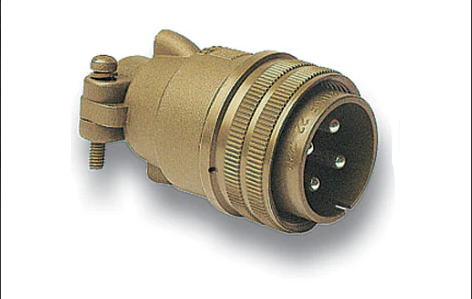
The heart of industrial automation connectors lies in true compatibility. When a plant utilizes circular connectors that adhere to globally recognized standards, such as the M12 interface or various MIL-spec configurations, they are no longer locked into a single vendor’s proprietary ecosystem. This interoperability creates a more flexible, resilient supply chain and allows for the seamless integration of new technologies from different manufacturers.
For example, a new sensor connection can be plugged directly into an existing Allied Connectors distribution block, provided both follow the same circular multi-pin connectors standard. This plug-and-play capability is the essential catalyst that allows a small, isolated automated cell to eventually scale into a fully integrated, plant-wide network.
Streamlining power, signal, and data integration
Standardisation does more than just simplify external connections; it fundamentally transforms the internal design and assembly of machinery. By utilizing standardized PCB connectors alongside universal power and signal connectors, design engineers can move toward a modular philosophy. In this model, complex sub-assemblies can be designed and tested independently before being snapped together during final assembly.
This modular approach drastically reduces the risk of miswiring, a common and expensive error in custom-built systems, and significantly speeds up the time-to-market for new automation solutions. Allied Connectors provides a comprehensive range of these standardized components, ensuring that whether an engineer is dealing with a low-voltage sensor connection or a high-amperage industrial power feed, the physical interface remains consistent and reliable.
This consistency allows for a copy-paste logic in machine design, where proven connection templates can be reused across different machine generations, ensuring that the industrial automation connectors used are always optimized for performance.
Sustainable growth and inventory optimisation
Finally, standardisation is the primary key to sustainable long-term growth. As an industrial facility scales up, the inventory management of spare parts can quickly evolve into a logistical nightmare if every machine on the floor utilizes a different, proprietary connector. This leads to spare part bloat, where capital is tied up in hundreds of unique, non-interchangeable components. By standardizing on industrial connectors from Allied Connectors, a plant can drastically reduce its dead stock.
When a single type of circular multi-pin connectors can service multiple machines across the entire production floor, the maintenance team only needs to stock a few core variants. This simplification not only reduces overhead costs but also ensures that repairs are faster, as the necessary parts are always on hand.
In the global race toward fully autonomous, lights-out manufacturing, the humble, standardized connector acts as the bridge that allows different technologies to speak the same physical language. Allied Connectors remains committed to being at the forefront of this movement, providing the reliable hardware that powers the next generation of Indian and global industry.